
26th Oct 2026
Thermal or Night Vision? Solving Canterbury Night Hunts
Thermal or Night Vision? Solving Canterbury Night Hunts
So you're heading out for a Canterbury night hunt. Before you start comparing brands or price tags, there's a bigger question: will the animal show up as heat, or as reflected or amplified light? That's the heart of night vision vs thermal, and it changes what you should carry for bush-edge and tussock country.
In simple terms, thermal is often the detection tool. It reads heat and can work in total darkness, light scrub and smoke haze. Night vision usually needs some ambient light or an IR illuminator to build an image, which makes it better for identification and observation once you've found something. But matching the sight to the job matters more than picking a side.
We'll unpack the one question behind the choice, what each tool actually solves, how Canterbury conditions affect performance, hunting scenarios, a side-by-side comparison, the permit, mounting and battery checks before you spend, and whether you really need both or a spotter, scope or drone. By the end, you'll know why detection is thermal and identification is night vision.
Heat or Reflected Light: The One Question Behind Thermal vs Night Vision
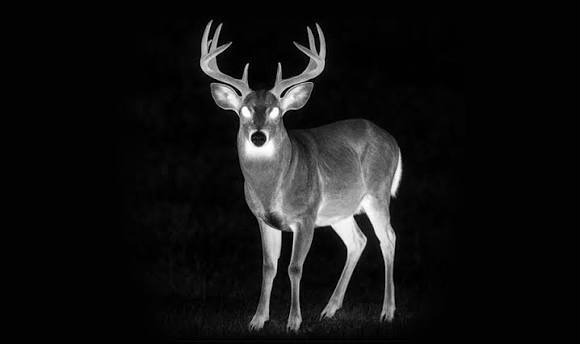
Every night sight falls into one of two families. A thermal optic builds its picture from the heat an animal gives off. A night vision device builds its picture from light it gathers and amplifies, or from infrared light it throws out and catches again.
That difference decides where each works. Thermal sees in complete darkness, so a pig, deer or possum shows as a warm shape against cooler ground. Digital night vision relies on amplifying available light or using an IR illuminator, check the spec sheet for the unit you're considering.
So thermal is the detection tool: it tells you something is out there. Night vision is the identification and observation tool, giving magnification and clarity to confirm what it is, how big, and how it's behaving. That split is a formal optics framework, not a sales line.
The expensive mistake is paying thermal money for a job that needs magnification and clarity, or buying night vision for a job that needs raw detection in thick cover. Tool matches job, not budget.
Want to start with finding? Browse our hand-held thermal spotters. Read the specs for the exact unit you're considering, then ring us on +64 27 551 5124 and we'll walk you through the manufacturer documentation before you commit.
What Thermal Actually Solves in the Dark
Thermal earns its keep when a lamp and your eyes have given up. An animal holding in scrub, tucked behind light vegetation or sitting low in tussock reads as a heat shape rather than a silhouette, exactly when a spotlight washes out.
Heat also carries through what blocks visible light. In our experience with local hunters, a heat signature often still lands on the sensor in light haze and dust, but treat this as field observation, not a published finding. Thermal vision hunting is built for that, and for high-volume pest work where you find animal after animal fast rather than study one. Overseas pest-control practice typically pairs thermal with high-volume sweeps, though NZ rules apply separately.
The honest side: thermal gives you a shape, not a face. Rocks and other warm surfaces, livestock included, in our experience, can throw misleading signatures, and contrast shifts as the night cools. A DOC study on thar found waiting about six hours after sunset let rocks cool enough for reliable detection.
It is not a detail tool either. Trophy heads, species confirmation at distance and ear tags are not thermal's strength, and long scanning sessions strain your eye.
Runtime varies between units. Check the stated battery life on the exact model, carry spare cells for an all-nighter, and see what the dark is hiding before you commit.
What Night Vision Actually Solves
Night vision is the other half of the equation. Magnification and clarity are the main strengths of a night vision device for tasks like confirming species, judging size and selecting a point of aim, though we recommend checking the manufacturer's specs for the specific unit.
Watching a wallow under moonlight is the classic case, on private land where night work is permitted. You sit still, the animal is on known ground, and the job is to observe and identify rather than sweep a whole face. A digital night vision unit with an IR illuminator does that well, even under heavy canopy where ambient light is scarce. Many units also capture video, check the spec sheet for the model you're considering.
The trade-offs are clear. With no ambient light it produces nothing until the IR illuminator is on, and that illuminator's usable range caps how far you can identify. Check the manufacturer's guidance on IR illuminator use and whether it is visible to animals. It's also slower at finding. Sweeping thick scrub is a poor use of the tool, because your target may not be lit or reflect enough to stand out. That's detection work, and detection is thermal territory.
Canterbury Conditions: Bush Edge, Tussock, Scrub and Smoke Haze
Bush edge is short-window country: animals step out into a narrow strip of open ground, often with no moon and no time. In our experience, a thermal gets you on the animal faster here, then you confirm with a scope once it stops.
Open tussock is where both compete. Thermal usually finds first because it reads heat at longer range, but a night vision device with magnification is often better for picking small targets apart once you know roughly where they are.
In our experience scrub is thermal country, dense cover leaves little ambient light or IR to work with, while a bedded pig's heat still reaches the sensor.
Smoke haze, dust and light rain all favour thermal. In principle, smoke and fog affect infrared radiation differently from visible light, for the detail, see Li et al. (2024), and our local experience suggests heat signatures hold up longer than IR illumination in haze. A useful rule of thumb on a night that looks clear but feels hazy.
Temperature matters more than most expect. On a still, cold night thermal contrast is strong and animals glow. On a warm, damp night, especially after a hot day, ground and animal temperatures can converge and the image gets harder to read.
Treat this as our practical take from local hunters who come through the shop, not a published study. Local behaviour matters, and we are happy to talk through the ground you actually hunt.
Match the Sight to the Job: Thermal vs Night Vision for Hunting Scenarios
Once the ground is sorted, the rest comes down to matching the sight to the job.
Pigs in scrub on a dark night, moving between patches of cover: thermal, detection and speed matter; scrub conditions covered above. This is the job a thermal riflescope does best.
Sitting a wallow under a decent moon, waiting for an animal to come in: night vision. Magnification, clarity and video recording are worth more than heat detection across a wide face.
Deer on the bush edge at last light or early dark: a hand-held thermal to find them, then a conventional day optic or night vision to identify and take the shot. Two tools, two jobs.
Rabbits, hares and small pests in open tussock: either can find them, but night vision magnification usually makes identifying and confirming easier at range.
High-volume control, moving through a block: thermal, because you are finding constantly rather than observing. Overseas night culling often shows thermal paired with a semi-auto in this pattern.
Simple rule: finding, go thermal. Watching, identifying or recording, go night vision. If your hunt is both, carry both or decide which one you can live without.
Side by Side: Thermal Versus Night Vision at a Glance
Here it is, compressed.
Detection in total darkness: thermal, for the reasons above.
Identification and detail: night vision is the better fit for tasks that need magnification and image clarity, confirming species, judging sex and size, and selecting a shot placement.
Working through cover: thermal wins in scrub, smoke haze, dust and light vegetation, because heat passes where light does not.
Observation and recording: night vision wins, especially on static sits over a wallow, a bait station or a known crossing, and for keeping video of what you saw.
Learning curve and setup: both need practice. Thermal rewards learning to read heat shapes and recognise false signatures; night vision rewards learning illuminator range, eye relief and focus discipline.
Cost direction: thermal has typically been the pricier option at similar image-quality tiers, which is worth checking against current stock, and exactly why matching the tool to the job beats buying the priciest unit on the shelf.
If you want one thermal that swaps between hand-held spotting and a mounted rifle, thermal clip-ons are worth a look. Permits, mounting and battery life are where a setup actually succeeds or fails, so those are your next checks.
Permits, Mounting and Battery: The Checks Before You Spend
Read your permit first. Permit conditions can set rules around night hunting and the gear you may use, check the current DOC permit conditions page at doc.govt.nz for the exact wording that applies to your area. The permit governs your hunt, not a forum post or a shop. Read the current conditions in full before you buy or head out. If anything's unclear, get it clarified before the hunt, not after.
The New Zealand Deerstalkers Association has published an advocacy alert on hand-held thermals and hunting permit updates. That area can change, so check the current position each season, not last year's. We won't give you a legal ruling, and you shouldn't take one from an article.
Then decide hand-held or mounted. A hand-held spotter is flexible and usually the first purchase. A mounted unit commits that rifle to night work, and eye relief, weight and balance need testing on the rifle before you buy.
Match battery life to your sit or sweep, allow for cold, and carry spares. A unit that dies at 1am has solved nothing. Protect it too: these are precision optics, and a cheap pouch or bouncing truck tray ends a good unit fast. Storage and spare cells are where thermal accessories earn their keep.
If you'd rather talk it through with someone who sets this gear up for a living, ring us on +64 27 551 5124 and describe the ground and the animal. That conversation saves more money than any spec sheet.
Do You Actually Need Both? Spotters, Scopes and Drones
The hand-held thermal plus rifle-mounted night vision pairing, two tools, two jobs, is already covered above; here the question is whether you need both at once.
If your night work is dedicated pest control in cover, a thermal scope on a dedicated rifle keeps it simple: one tool, one job, no swapping in the dark. Thermal reads shapes rather than faces, so identification still earns care.
Scanning a big block or steep country before you even leave the ute is drone work. A thermal drone covers ground from above in a way that complements hand-held units for big blocks and steep country, and we stock DJI thermal drones alongside our thermal and day optics. Talk to us about how they fit your night workflow.
Don't buy twice. A cheap compromise unit that does neither job well usually costs more than buying the right tool once, after you have worked out what your hunts actually demand.
The Short Version: Detection Is Thermal, Identification Is Night Vision
If you're still weighing up whether you need both, bring one question to the counter: does your night hunt need the animal found, or confirmed? The split still stands: finding is thermal, confirming is night vision.
Check current permit conditions before you head out, the rules around hand-held thermals have been under review.
Bush edge and scrub lean thermal; tussock and wallow sits leave room for night vision, as covered above. Be honest about which job you do more often.
Then talk it through with people who set this gear up locally. High Country Ballistics is a family-run shop in Oxford, North Canterbury. Ring us on +64 27 551 5124, describe your ground and your animals, and we will help you get the setup right the first time.
Conclusion
The framework is straightforward: match the tool to the job, check your permits, and avoid a cheap compromise that does neither job well. Call High Country Ballistics on +64 27 551 5124 and we'll help you build the right setup for your ground the first time.